Q1. Under what qualification was dod Dermatology Cheongdam designated?
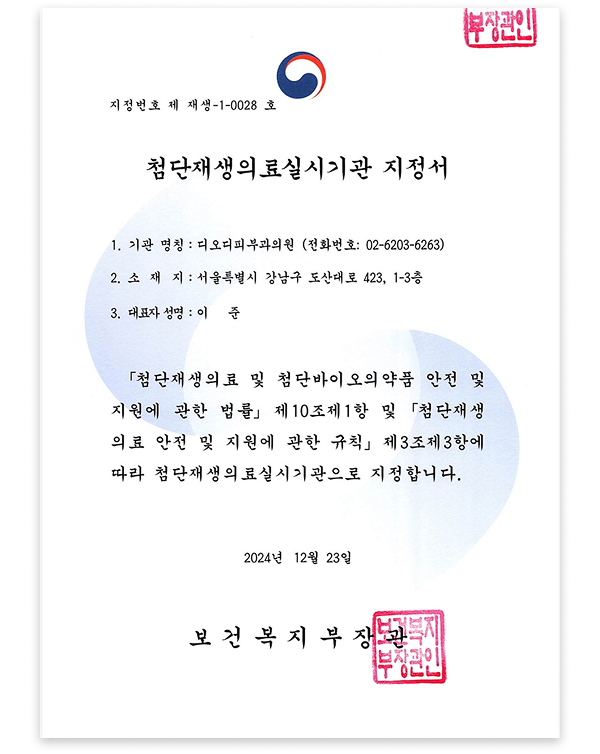
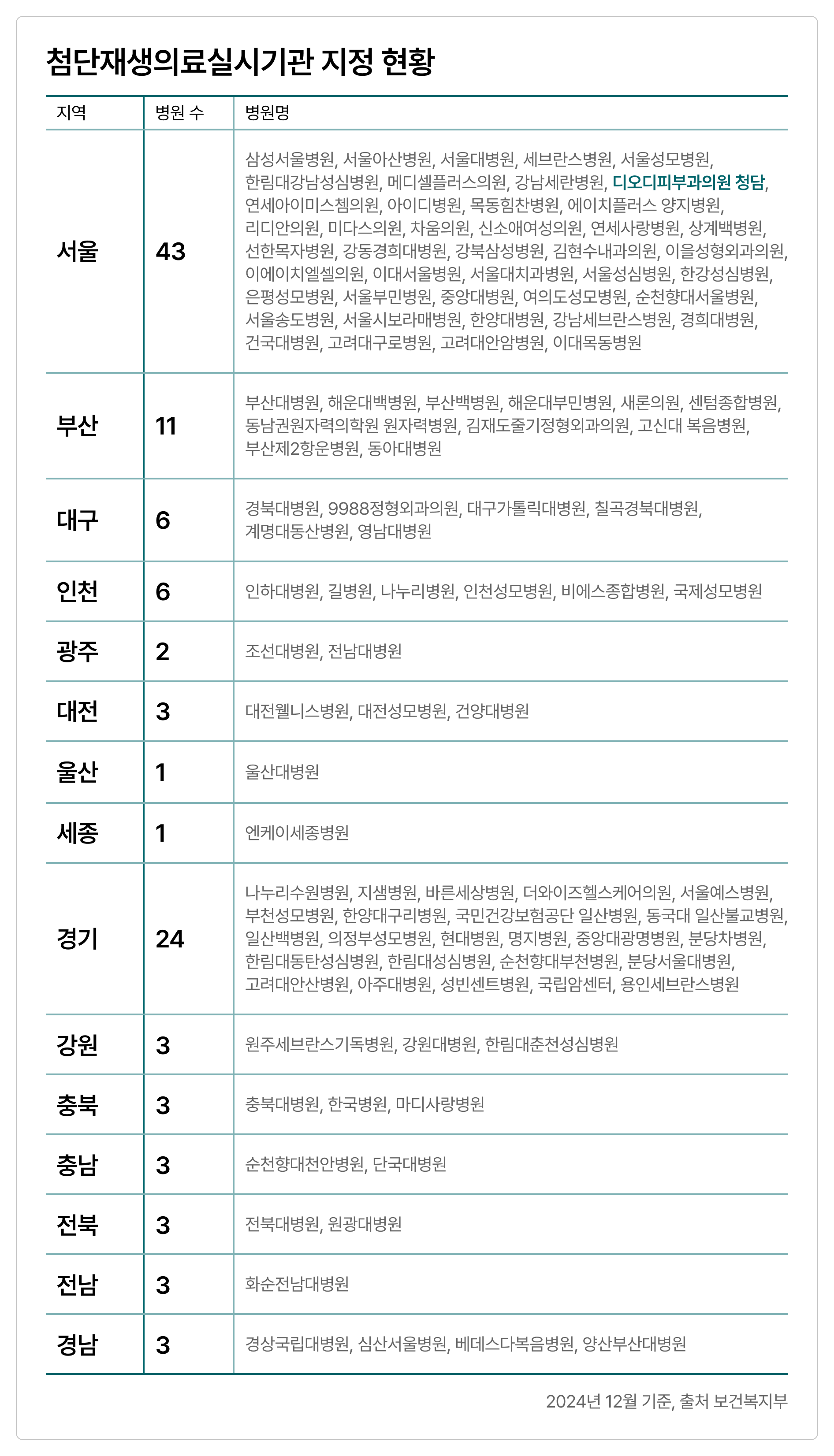
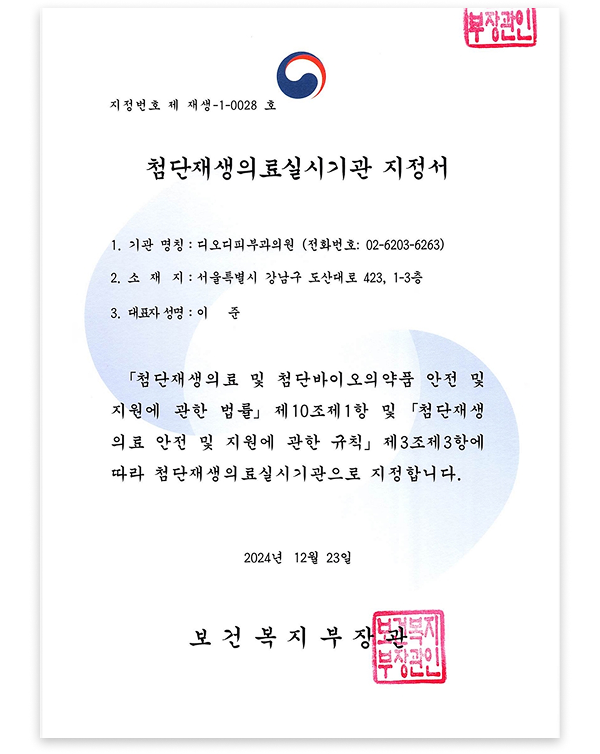
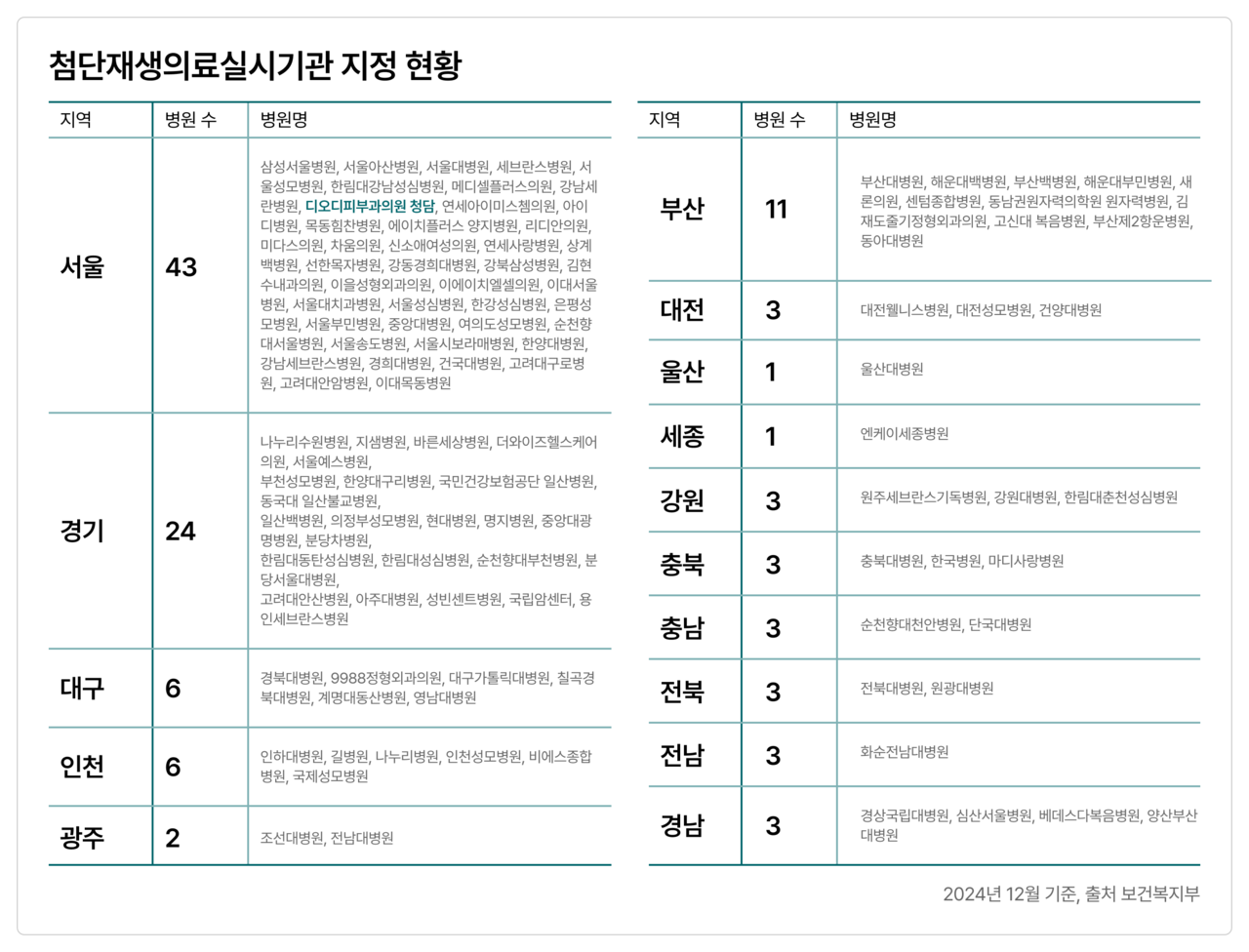
A. dod Dermatology Cheongdam was designated by the Ministry of Health and Welfare as an Advanced Regenerative Medicine Institution in December 2024, becoming the first dermatology clinic in Korea—excluding general and tertiary hospitals—to receive this designation. An Advanced Regenerative Medicine Institution is qualified to formally perform regenerative medicine procedures using human-derived cells, including cell therapy, gene therapy, and tissue engineering therapy. This designation is granted only to institutions that pass the Ministry of Health and Welfare's strict review and on-site inspection.
Q2. What criteria must be met to receive the Advanced Regenerative Medicine Institution designation?
A. The Advanced Regenerative Medicine Institution designation is granted only after passing six strict criteria: facilities capable of conducting clinical research, related equipment and infrastructure, staff to manage the research director, cells, and data, Standard Operating Procedures (SOPs), completion of certified training by the Ministry of Health and Welfare, and passing cell review and on-site inspection. dod Dermatology Cheongdam meets all of these requirements and has verified qualifications to perform regenerative medicine across all areas of facilities, personnel, and processes.
Q3. What kind of treatment method is advanced regenerative medicine?
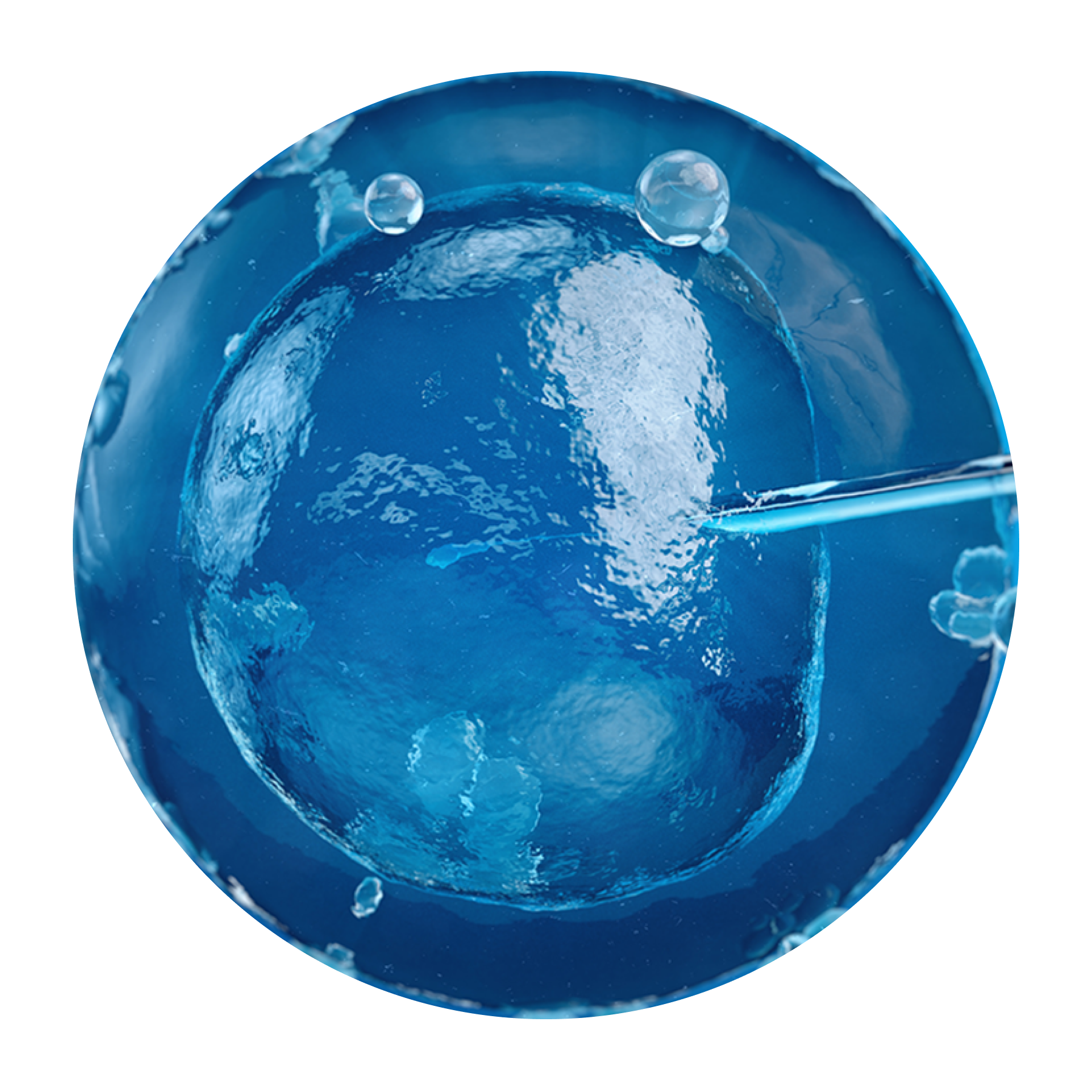
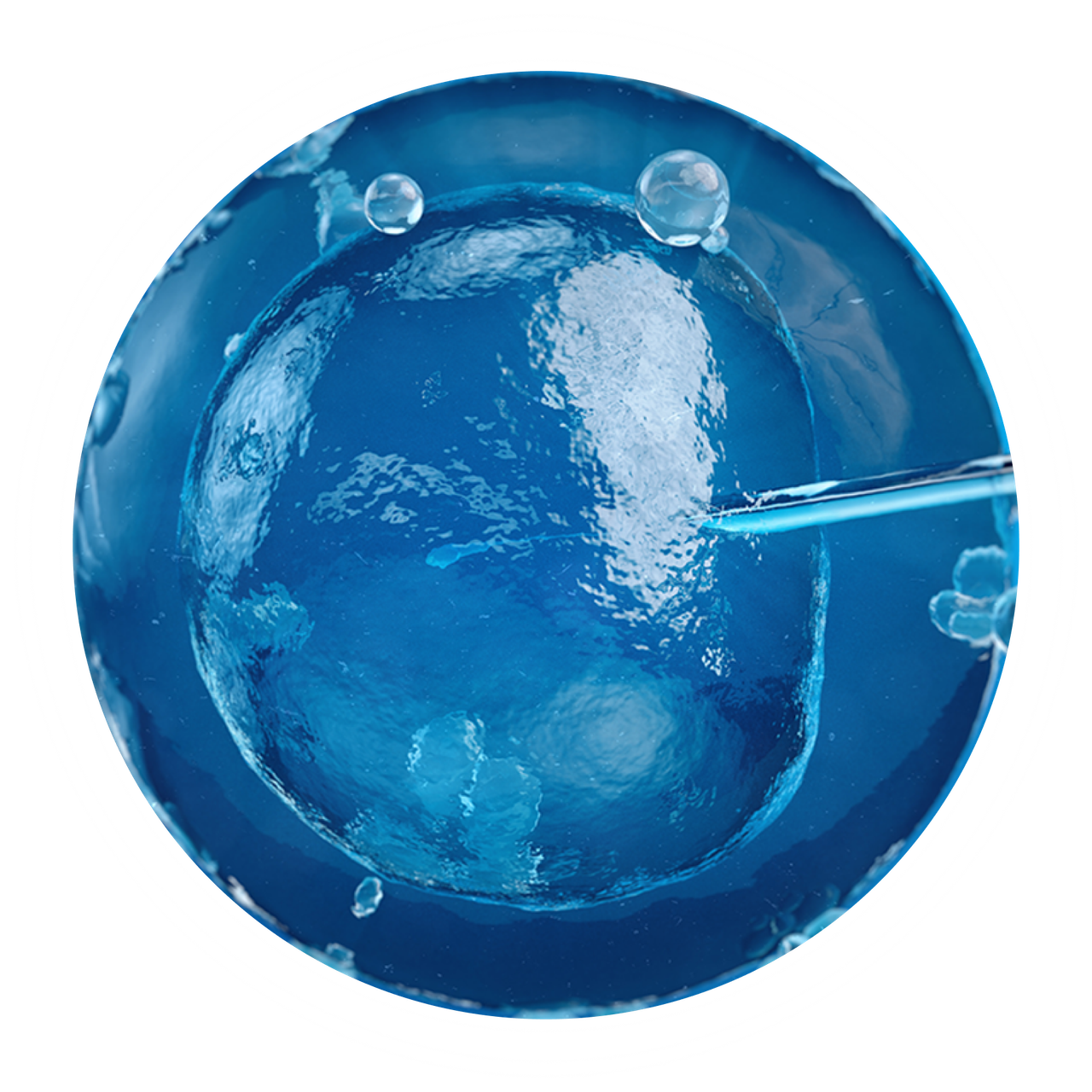
A. Advanced regenerative medicine is a treatment method that uses human-derived cells to regenerate, restore, or form the structure or function of the human body, including cell therapy, gene therapy, and tissue engineering therapy. While conventional medicine has focused on replacing damaged tissue or relieving symptoms, advanced regenerative medicine is a next-generation treatment approach that restores bodily function and reconstructs structure at the cellular level. The key difference is its approach of reversing, at the cellular level, the regenerative capacity that has declined due to aging, disease, or damage.
Q4. In which fields is advanced regenerative medicine used?
A. Advanced regenerative medicine is used in three main areas: tissue and organ regeneration, recovery of body functions and structural repair, and treatment and prevention of diseases. Tissue and organ regeneration involves regenerating damaged areas such as skin, cartilage, and nerves and generating new tissue. Functional recovery and structural repair involves a customized approach to degenerative changes such as arthritis and aging skin. Treatment and prevention of diseases involves managing intractable diseases and encouraging prevention through early intervention. The direction of advanced regenerative medicine is to build a sustainable medical model from a personalized care perspective.
Q5. What advanced regenerative medicine procedures does dod Dermatology Cheongdam offer?
A. Based on its status as an Advanced Regenerative Medicine Institution, dod Dermatology Cheongdam offers a variety of procedures using human-derived cells, including stem cells, NK cells, and the E-NA Cell line (P/A/G/NK). Its representative treatments include autologous peripheral blood-derived cells (E-NA Cell P), autologous adipose-derived SVF (E-NA Cell A), allogeneic umbilical cord/placenta-derived mesenchymal stem cells (E-NA Cell G), autologous NK cells (E-NA Cell NK), and comprehensive stem cell management. All cell procedures are carried out within a safety protocol and quality control system in accordance with Advanced Regenerative Medicine Institution regulations.